When I speak with PSPs across emerging markets, I hear the same concern every time:
“If merchants use orchestration, won’t we lose the relationship?”
It’s a fair concern but it’s a misconception.. In reality, payment orchestrators protects PSP–merchant relationships. It helps PSPs retain growing merchants, reduce integration friction, and ensure merchants can scale into different markets without switching providers.
At MoneyHash, we don’t replace PSPs. We extend their capabilities, expand their reach, and strengthen the value they deliver.
Let me explain how.
Addressing the Misconception: Orchestration Competes With PSPs
You worry we'll route volume away from you, favor competitors, or commoditize your infrastructure.
That's not how this works.
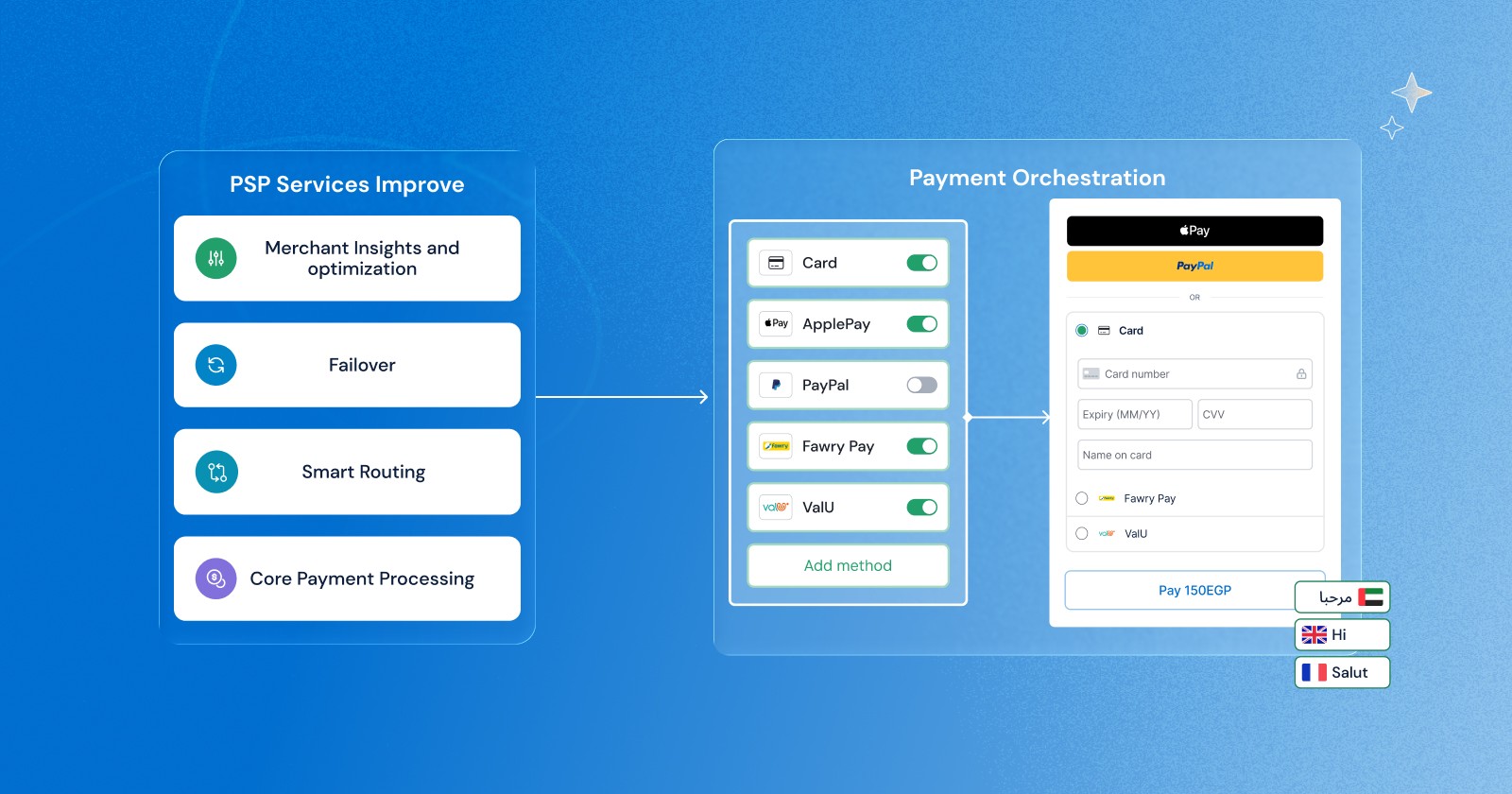
We do not control routing. Merchants set routing logic (card type, geography, amount, risk score). PSPs keep pricing, contracts, and commercial control - traffic and revenue remain theirs. We simply manage the technical complexity so you don't have to.
When a merchant implements orchestration, nothing changes on the commercial or operational side. Contracts stay the same. Fees stay the same. Day-to-day operations stay the same. What changes is the technical burden. We sit in the middle to manage the technical complexities that payments carry. Merchants can reach out to us first for technical support. If needed, we coordinate with you behind the scenes.
In essence, we strengthen your relationship by absorbing the technical overhead.
The Reality: Orchestration Extends Your Distribution
Here's what actually happens when you integrate with a payment orchestration platform:
You gain immediate access to our merchant network - retailers, F&Bs, gaming platforms, and B2B businesses across MENA, Africa, LATAM, and Southeast Asia. These merchants are already looking for multi-provider setups, and your one-time integration makes you accessible to all of them.
You're no longer limited by your direct sales capacity. Every merchant on our platform becomes a potential customer for you. And because we handle the technical integration, your team can focus on what drives revenue: processing payments and supporting merchants.
How This Works in Practice
We constantly refer merchants to PSPs, making multi-provider setups more accessible through our integration. PSPs also refer clients to us when those merchants need features or markets the PSP doesn't provide - like wallet infrastructure, subscriptions, dynamic checkout, or expansion into regions the PSP doesn't cover.
For example, when a merchant wants to expand into the African market but you don't have that capability, you can connect them to us. You retain the merchant relationship while giving them room to expand. The merchant doesn't leave you, they grow with you.
Another example: PSPs who don't cover payouts refer merchants to us so those merchants can access payout capabilities while staying with their PSP for payment processing. You keep the core payment processing volume. We handle the additional capability. Everyone wins.
The Four Biggest Wins for PSPs
In emerging markets, orchestration matters more than in mature ecosystems. Payments are fragmented. Card penetration is low. Alternative payment methods dominate - STC Pay, Vodafone Cash, Aman, Fawry, carrier billing.
I used to be in the gaming industry. We had a lot of users from Iraq, Egypt, and Saudi Arabia who preferred alternative payment methods like STC Pay, Vodafone Cash, over-the-counter payments like Aman and Fawry, and direct carrier billing like Zain or Asiacell.
When merchants adopt orchestration for these alternative payment methods, you become part of a wider payment portfolio. This increases your retention and reduces the risk of churn when merchants expand. Instead of losing the merchant when they outgrow your coverage, you stay in the mix.
MoneyHash simplifies merchant complexity by providing a single integration point, giving them access to multiple payment providers while managing routing, retries, and reporting across all of them. Beyond transaction volume, here's what our current partners are already seeing:
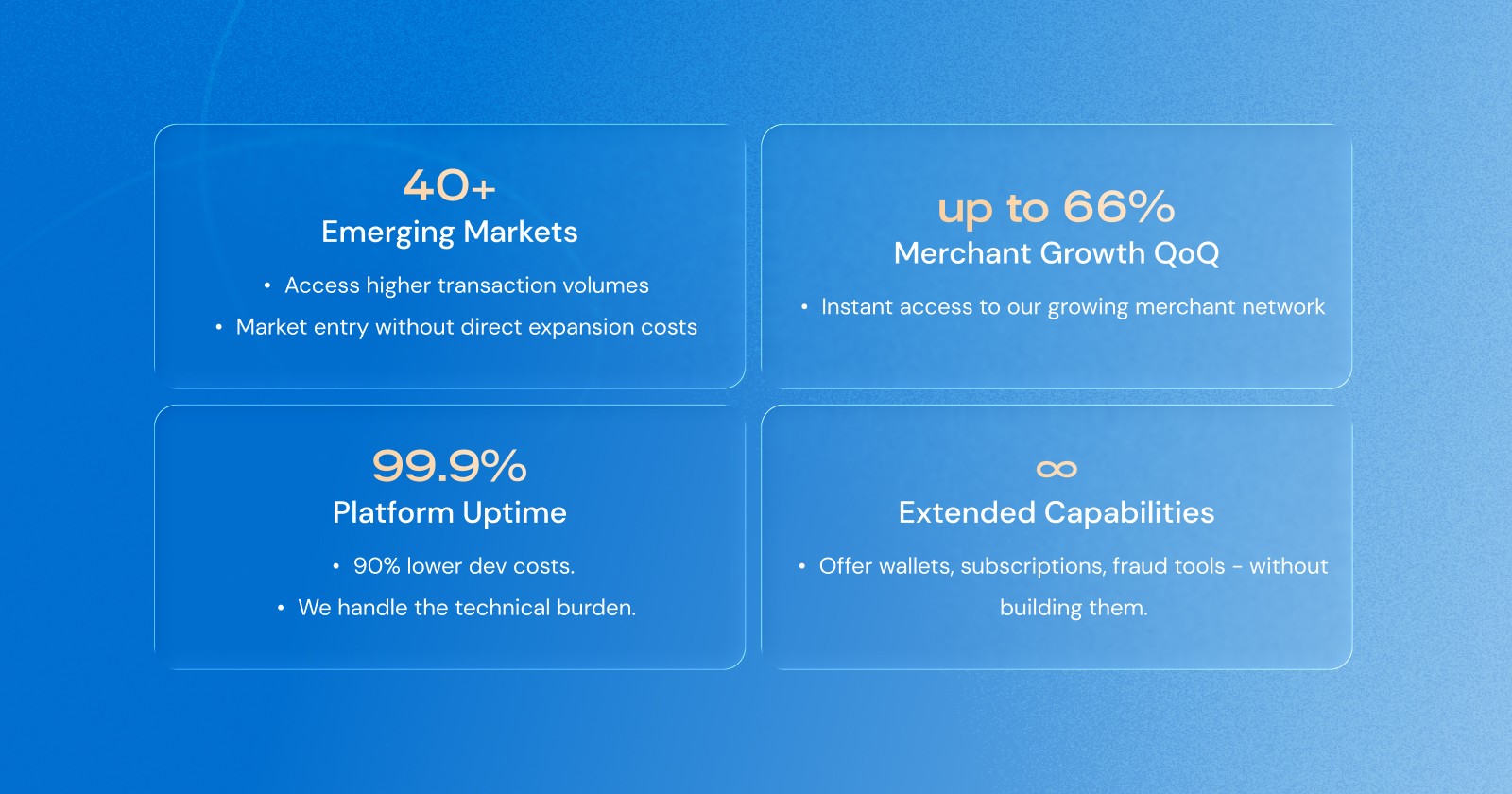
First, faster activation. Plug-and-play integration means merchants go live in days, not months. You become accessible to all our existing customers and potential merchants without the overhead of custom integrations. We've seen partners save over 11,000 hours annually on integration work alone.
Second, access to a growing merchant network. You can easily promote and launch your capabilities to this growing merchant base. Our platform has enabled some businesses to grow 66% quarter-over-quarter as merchants discover the value of unified payment infrastructure. When you integrate, you gain immediate access to this growth.
Third, operational efficiency. We absorb the technical burden - routing, retries, reconciliation, reporting. Your team focuses on core operations instead of managing custom merchant integrations. The platform maintains 99.9% uptime and delivers 90% lower development costs compared to building this infrastructure in-house.
Fourth, extended capabilities. You can offer merchants capabilities you don't provide, like wallet infrastructure, subscriptions, settlement reconciliation, or advanced fraud tools without building them in-house. And if your merchant wants to expand into a country or region you don't cover, we support the merchant's expansion plans while the merchant continues using you for their core needs.
When your merchants win, you win. Your volume increases. Your retention strengthens. Your infrastructure costs drop.
The Mindset Shift: Partnership Over Build
The payment industry is shifting from "we have to do everything ourselves" to a partnership-driven approach. PSPs are realizing that the next competitive frontier won't be who has the best gateway - it will be who plugs into the most flexible ecosystem.
At MoneyHash, we've built advanced payment orchestration features like reconciliation, BIN lookup, Apple Pay self-serve, and network tokens through multiple iterations based on real merchant needs. All these function together to give merchants control while reducing the technical complexity you would otherwise have to manage - and they continue to evolve based on real payment challenges in emerging markets.
The Opportunity: Future-Proof Your Competitive Position
Merchants in emerging markets need flexibility. They need access to multiple providers, payment methods, and markets. The question isn't whether they'll seek that flexibility. It's whether they'll find it while staying with you or by leaving you behind.
Orchestration gives you a third option: expand your capabilities without the build cost, the maintenance burden, or the risk of losing the relationship.
We don't see you as just another integration. You're a partner in building the infrastructure that emerging markets need. The PSPs already working with us aren't just retaining merchants -they're also winning new ones. They're offering more while doing less. They're positioning themselves as enablers, not bottlenecks. And we're growing alongside them, not at their expense.
Your business doesn't have to shrink to make room for orchestration. It can grow because of it. Want to see how? Book a call with me today.


Author:

Jude Al Masri
Partnerships Manager
With a background in business development & partnerships, I thrive at the intersection of technology & finance - helping businesses optimize their payments strategy and unlock growth opportunities.